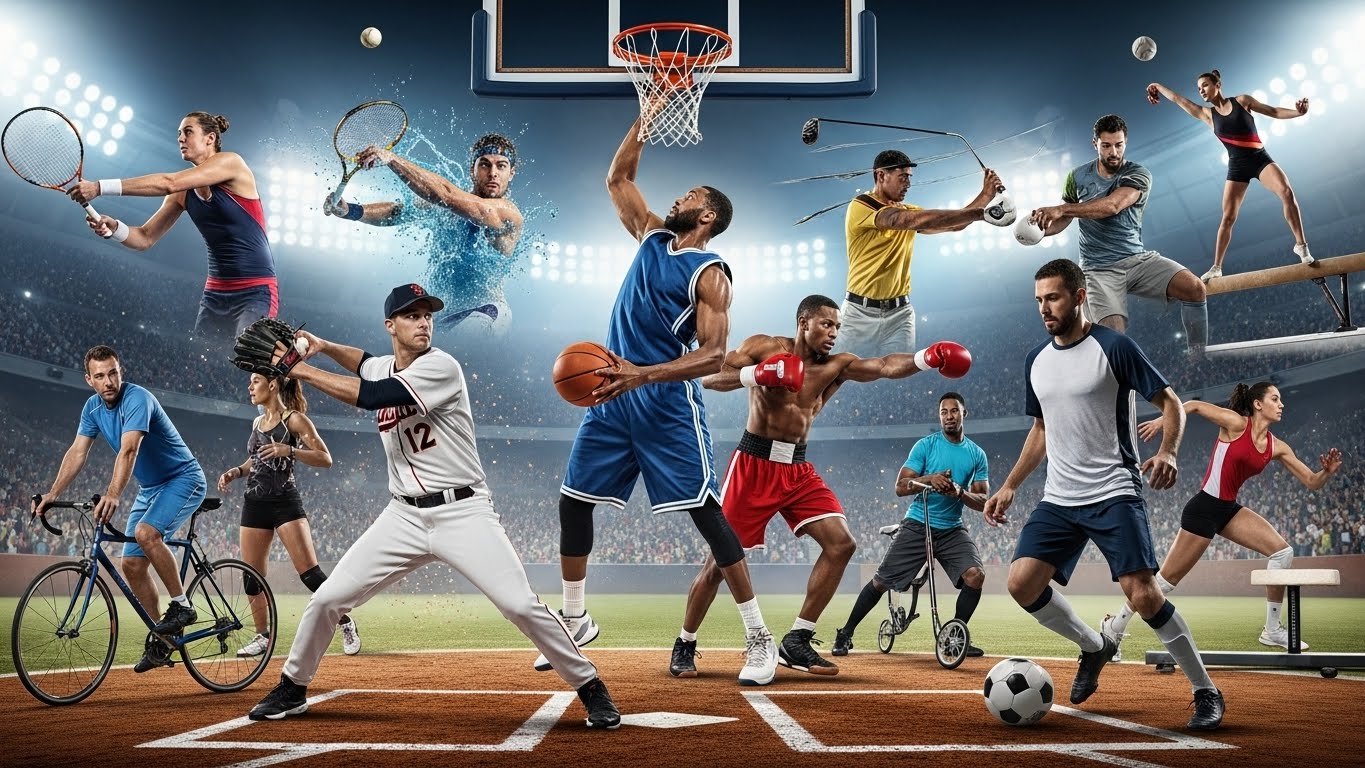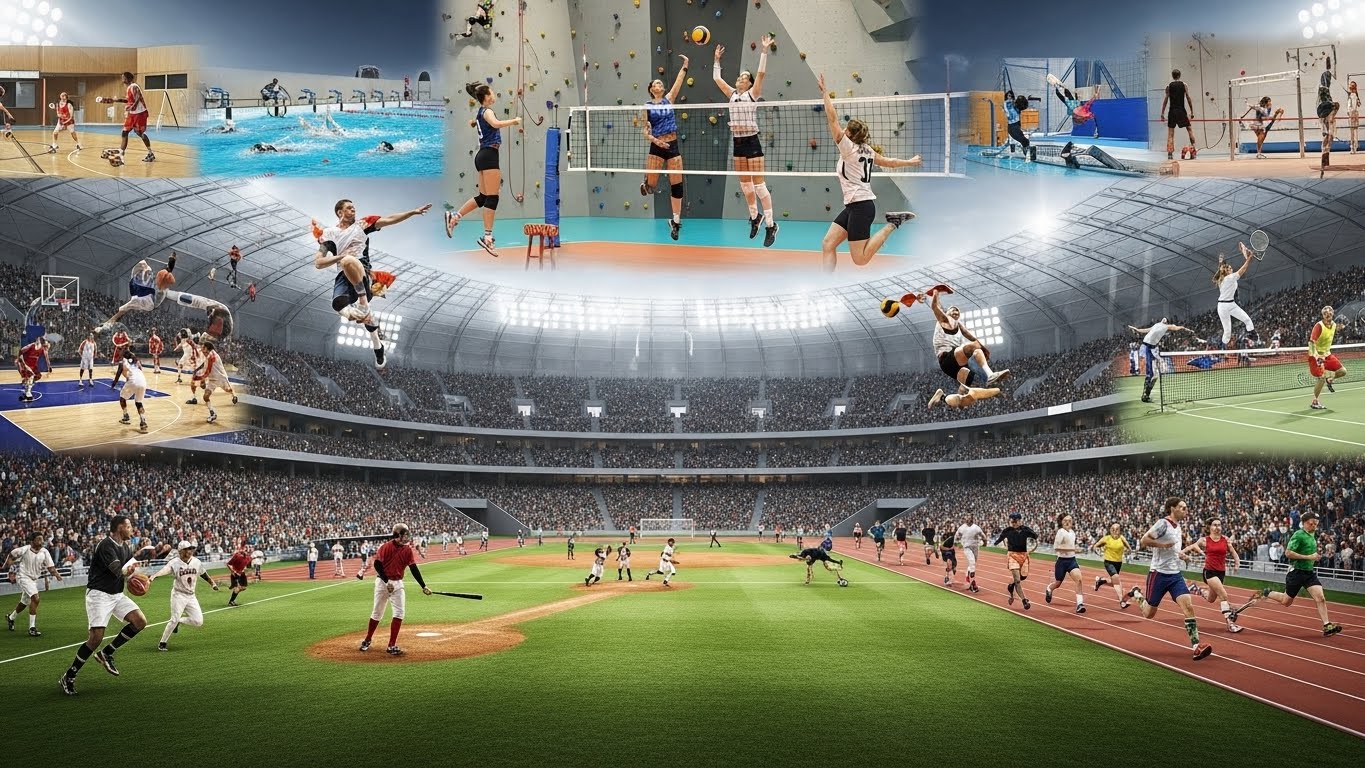






Sports have always been more than games. They are a global language spoken by millions across continents, bridging barriers of race, religion, class, and nationality. From the roar of a packed stadium to the silent focus of a lone athlete on the starting line, sports have the unique ability to ignite emotion, foster unity, and inspire greatness. Whether played on the dusty fields of rural villages or in the gleaming arenas of megacities, the essence of sports remains the same — competition, discipline, teamwork, and passion.
In today’s world, sports are not just about physical performance; they represent culture, economy, education, and identity. This article delves into the many dimensions of sports — their history, evolution, psychological impact, economic influence, and their vital role in shaping individuals and societies.
The Origins of Sports: A Journey Through Time
The history of sports is as old as civilization itself. Ancient societies engaged in physical competitions long before the term “sport” even existed. Archaeological evidence shows that sports like wrestling, running, and ball games were practiced in ancient Egypt, Greece, China, and Mesoamerica thousands of years ago.
In ancient Greece, sports held a sacred place in society. The Olympic Games, first recorded in 776 BCE, were not just competitions but religious celebrations dedicated to Zeus. Athletes trained rigorously, representing their city-states, and victors were immortalized as heroes. These games laid the foundation for modern sporting culture, emphasizing fair play, honor, and excellence — the very spirit that defines sports today.
Across the world, different cultures developed their own traditional sports. The Mayans played a ball game called Pok-ta-Pok, which had ritual significance. In China, Cuju, an early form of football, was played as far back as 2,500 years ago. In India, kabaddi and wrestling have ancient roots, while the indigenous peoples of North America played lacrosse long before European contact. These traditions reveal how deeply sports are woven into human history, serving not only as entertainment but as expressions of identity, spirituality, and community.
The Evolution of Modern Sports
The modern era of sports began in the 19th century with industrialization and globalization. As cities expanded and leisure time increased, organized sports clubs and associations emerged. Rules were standardized, competitions were formalized, and international sporting events began to take shape.
England played a pivotal role in shaping many modern sports. Football, cricket, rugby, and tennis all found structure and global recognition through British influence. The codification of rules made it possible for sports to spread beyond local regions and become international phenomena.
The revival of the Olympic Games in 1896 by Baron Pierre de Coubertin marked a new chapter in sports history. The modern Olympics embodied ideals of peace, education, and global cooperation through athletic competition. Over time, the event grew from a small gathering of male athletes to a massive global festival featuring thousands of participants from nearly every nation.
Technological advances further revolutionized sports. The invention of radio, television, and later the internet transformed sports into a global spectacle. Fans could now follow their favorite teams and athletes in real time, transcending geographic boundaries. The introduction of advanced training equipment, sports science, and analytics made athletes stronger, faster, and more efficient than ever before.
The Psychological and Emotional Power of Sports
Sports are not just physical; they are profoundly psychological. Every match, race, or game is a test of mental strength, focus, and resilience. Athletes often describe the intense psychological battles they face — the fear of failure, the pressure of expectations, and the constant pursuit of perfection.
Participation in sports teaches essential life skills such as discipline, patience, teamwork, and perseverance. Athletes learn to handle victory with humility and defeat with dignity. The lessons learned on the field often translate into everyday life, shaping character and mindset.
For fans, sports provide emotional release and collective joy. Supporting a team can create a sense of belonging and identity, bringing people together across social divides. The excitement of a last-minute goal or a dramatic comeback unites strangers in shared emotion. This sense of community is one of the most beautiful aspects of sports.
Moreover, sports can be therapeutic. Physical activity releases endorphins, reducing stress and improving mental health. Many rehabilitation programs incorporate sports to help individuals recover from trauma, addiction, or depression. Whether playing or watching, sports have an undeniable power to heal and inspire.
The Economic and Social Impact of Sports
Beyond their cultural and emotional influence, sports have become a massive economic force. The global sports industry is worth hundreds of billions of dollars, encompassing everything from professional leagues and broadcasting rights to merchandise and tourism.
Major sporting events such as the FIFA World Cup, the Olympic Games, and the Super Bowl generate enormous economic activity. Host cities often invest heavily in infrastructure, stadiums, and tourism development. While these events can boost local economies, they also raise questions about sustainability and inequality, as the benefits are not always evenly distributed.
Sports also provide employment opportunities across sectors — from coaching and management to media and technology. The rise of eSports, for example, has created a new digital economy, blending gaming and competition to attract millions of fans worldwide.
Socially, sports have proven to be powerful tools for change. They promote inclusion, gender equality, and diversity. Campaigns like “Kick It Out” in football and “This Girl Can” in fitness have encouraged more participation and challenged stereotypes. Athletes often use their platforms to raise awareness about important issues, from racial injustice to climate change, reminding the world that sports can be a force for good.
Sports and Education: Building Character Through Play
Sports and education go hand in hand. In schools and universities, physical education is an integral part of learning. Sports teach values that complement academic growth — teamwork, time management, leadership, and strategic thinking.
Students who participate in sports often display higher levels of confidence and discipline. Team sports, in particular, teach cooperation and communication, skills that are vital in both professional and personal life. Furthermore, sports provide opportunities for scholarships, helping young people access education that might otherwise be out of reach.
Many educational institutions also emphasize the importance of balancing academics with athletics. The student-athlete model, though challenging, encourages holistic development. It instills a sense of accountability and resilience — qualities that prepare individuals for life beyond school.
At the same time, it’s essential to maintain balance. Overemphasis on winning can lead to burnout and unhealthy pressure. The real goal of sports in education should be participation, personal growth, and joy.
Women in Sports: Breaking Barriers and Redefining Strength
The history of women in sports is one of resilience and triumph. For centuries, societal norms restricted women from participating in competitive athletics. Yet, determined pioneers challenged these barriers and paved the way for future generations.
From the early 20th century, when women were first allowed in the Olympics, to today’s world of professional women’s leagues, the progress has been remarkable. Icons such as Serena Williams, Simone Biles, Megan Rapinoe, and Naomi Osaka have redefined what it means to be an athlete. Their excellence has shattered stereotypes and inspired millions of girls worldwide to pursue their sporting dreams.
However, gender inequality in sports persists. Issues such as pay disparity, unequal media coverage, and limited access to facilities continue to challenge female athletes. The fight for equality is ongoing, but awareness and advocacy are creating positive change.
Women’s sports have proven their global appeal, with record-breaking audiences for events like the Women’s World Cup. As more investments and sponsorships flow into women’s leagues, the future looks promising. The empowerment of women through sports is not just about competition; it’s about representation, confidence, and equality.
Technology and Innovation in Sports
Technology has transformed the landscape of sports in extraordinary ways. Today, data analytics, wearable devices, and artificial intelligence play a crucial role in performance enhancement and strategy. Coaches analyze player movements, heart rates, and fatigue levels to optimize training programs.
Instant replay and goal-line technology have improved fairness and accuracy in officiating. Virtual and augmented reality are being used for training, allowing athletes to simulate real-game situations without physical strain.
Fans, too, benefit from technological innovation. Live streaming, virtual fan experiences, and social media engagement have brought supporters closer to the action than ever before. The digital revolution has made sports more interactive, inclusive, and accessible.
Yet, with these advancements come ethical questions — about data privacy, performance-enhancing technologies, and the essence of human competition. The challenge lies in balancing innovation with integrity.
The Role of Sports in Society and Peacebuilding
Sports have often served as a bridge in times of conflict and division. Historical events like the “Ping Pong Diplomacy” between the United States and China in the 1970s demonstrated how sports can open diplomatic channels. Similarly, during the 1995 Rugby World Cup in South Africa, Nelson Mandela used sport as a tool to unite a nation still healing from apartheid.
Organizations around the world use sports to promote peace, education, and development. In refugee camps and post-war regions, sports programs help rebuild communities, teaching children teamwork and hope. The United Nations recognizes sports as a means to achieve social progress and global harmony.
Sports transcend language and politics. When athletes compete on a global stage, they represent more than themselves — they embody the dreams and pride of their nations. Every handshake, every shared moment of respect between rivals, reinforces the idea that humanity can find unity through play.
The Dark Side of Sports: Challenges and Controversies
While sports inspire greatness, they also face serious challenges. Corruption, doping, match-fixing, and exploitation have tainted the purity of competition. The pressure to win at all costs has led some athletes and organizations to compromise ethics.
Doping scandals, for instance, have exposed the darker side of elite sports. The use of performance-enhancing drugs undermines fairness and endangers athletes’ health. Efforts by international bodies to enforce stricter regulations and testing are ongoing, but the temptation remains strong in a high-stakes environment.
Commercialization has also changed the nature of sports. Excessive focus on profit, celebrity culture, and brand endorsements sometimes overshadows the spirit of the game. Ticket prices, media rights, and sponsorship deals have made sports a billion-dollar business, raising concerns about accessibility and authenticity.
Furthermore, the physical and mental toll on athletes cannot be ignored. The pressure to perform, combined with intense schedules, often leads to burnout and psychological distress. The recent openness of athletes about mental health has sparked an important conversation about the need for support and balance in professional sports.
The Future of Sports: Sustainability, Inclusion, and Digital Transformation
As we move deeper into the 21st century, the future of sports will be defined by sustainability, inclusivity, and technology. Climate change has forced organizations to reconsider the environmental impact of massive events. Efforts to make sports more eco-friendly include using renewable energy, reducing waste, and designing sustainable venues.
Inclusivity will also shape the future. Paralympic and adaptive sports continue to break barriers for athletes with disabilities, demonstrating that excellence knows no physical limit. The growing acceptance of gender diversity in sports marks another important step toward equality and representation.
Digital transformation will further expand how we play and experience sports. Virtual reality competitions, AI-assisted coaching, and data-driven fan engagement are already changing the landscape. Yet, at its heart, sports will always remain about human emotion — the thrill of competition, the beauty of movement, and the unity of shared experience.
Conclusion: The Enduring Spirit of Sports
Sports are the heartbeat of humanity’s collective spirit. They teach us to strive, to endure, and to believe in something greater than ourselves. Every goal scored, every record broken, and every underdog victory reflects the boundless potential of human will.
In an increasingly divided world, sports continue to remind us of what we share — passion, perseverance, and play. Whether it’s a child chasing a ball in a dusty alley or an athlete standing on an Olympic podium, the message is the same: through effort, respect, and unity, we find our true strength.
Sports are more than physical contests. They are stories of triumph, lessons of character, and celebrations of humanity. As long as there are hearts that beat and dreams that soar, the spirit of sports will continue to inspire generations to come.