





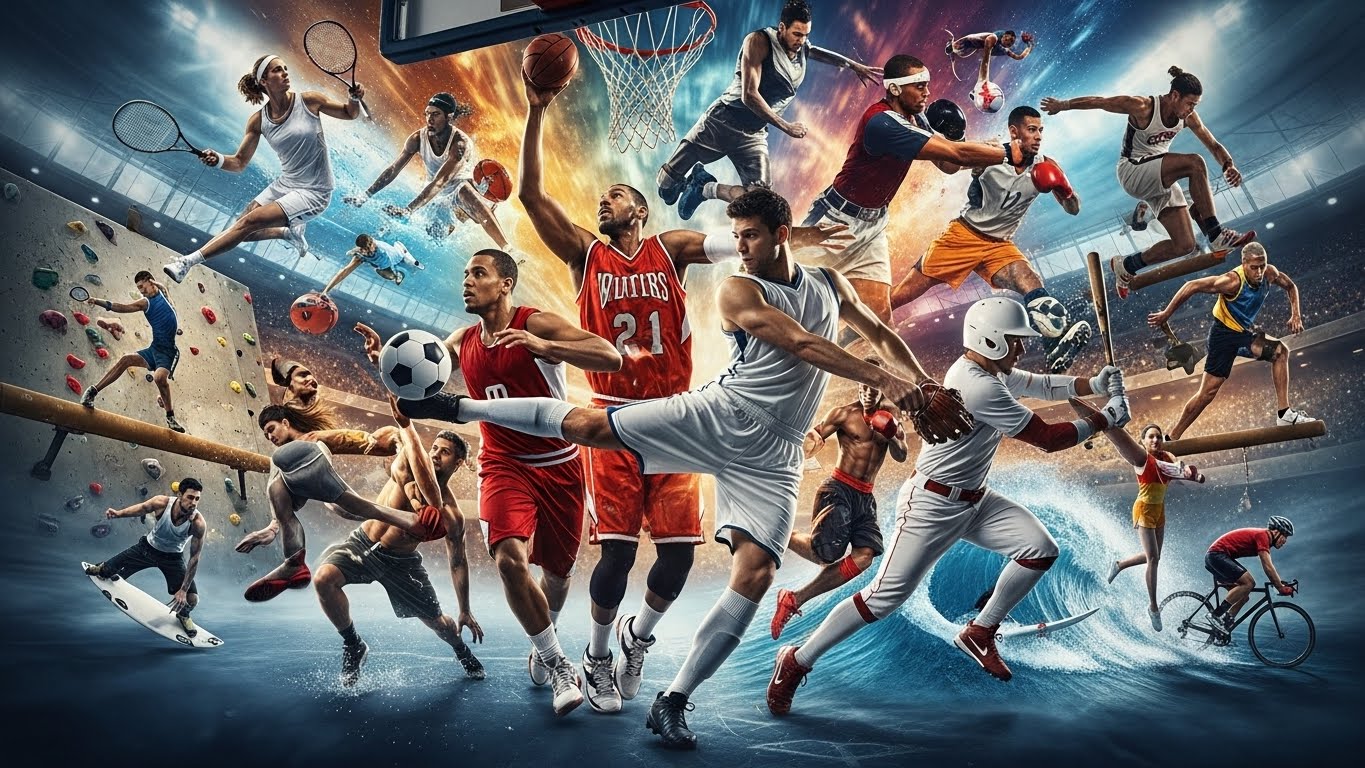
Introduction: The Universal Language of Sports
Sports have been an integral part of human civilization for thousands of years. From ancient Olympic games to modern-day football leagues, sports transcend culture, language, and geography. They are more than just competitions; they are a reflection of human spirit, perseverance, and unity. Across the globe, people gather to witness athletes push the boundaries of human potential, and fans experience emotions that words often cannot capture. Sports are a universal language, connecting people across continents, breaking barriers, and inspiring millions to dream bigger.
The Evolution of Sports Through History
The origins of sports can be traced back to prehistoric times when early humans engaged in physical activities for survival, training for hunting, and communal bonding. The ancient Olympic Games in Greece symbolized not only physical prowess but also cultural exchange and intellectual pursuit. Over centuries, sports evolved with societal changes, industrialization, and globalization. Football, cricket, basketball, and countless other sports developed standardized rules, organized leagues, and worldwide followings. Today, sports are a global phenomenon, influencing fashion, entertainment, and even politics. This evolution shows that sports are not static; they grow and adapt with society, reflecting the values and aspirations of each era.
The Psychological Impact of Sports
The influence of sports extends far beyond the physical domain. Psychologically, sports play a critical role in shaping self-esteem, resilience, and mental health. Participating in sports teaches individuals how to cope with stress, manage emotions, and face failures with determination. For instance, a young athlete who loses a game learns the importance of perseverance and adaptability. Moreover, watching sports provides a shared emotional experience for fans, creating a sense of belonging and community. Research consistently shows that sports engagement reduces anxiety, improves mood, and fosters positive social interactions. The mental benefits of sports are as significant as their physical ones, making them a holistic tool for human development.
Physical Health Benefits of Sports
Engaging in sports is one of the most effective ways to maintain physical health. Activities such as running, swimming, and cycling improve cardiovascular health, strengthen muscles, and enhance flexibility. Team sports like soccer, basketball, and rugby not only promote endurance but also encourage strategic thinking and coordination. Regular physical activity through sports can prevent chronic illnesses such as obesity, diabetes, and heart disease. Moreover, sports improve sleep quality and boost overall energy levels, enhancing daily life performance. In a world increasingly dominated by sedentary lifestyles, sports serve as a vital counterbalance, promoting longevity and vitality.
Sports and Character Development
Sports are powerful tools for character building. They instill values such as discipline, integrity, teamwork, and leadership. In a competitive environment, athletes learn to balance ambition with humility, striving for excellence while respecting opponents. Team sports particularly emphasize collaboration, communication, and mutual support. Children who participate in sports often develop better social skills, empathy, and conflict-resolution abilities. For adults, sports reinforce goal-setting and perseverance in professional and personal spheres. Essentially, sports act as a microcosm of life, where lessons learned on the field often translate into everyday behavior.
The Role of Sports in Society
Beyond individual benefits, sports play a significant role in shaping societies. They serve as platforms for social integration, breaking down barriers of race, gender, and economic status. Major sporting events such as the World Cup or the Olympics unite nations, creating moments of collective pride and identity. Sports also have the power to highlight social issues, with athletes and organizations advocating for equality, environmental sustainability, and human rights. Additionally, sports contribute significantly to economies through tourism, merchandising, and media rights, showcasing their multifaceted impact on communities and nations alike.
The Science Behind Athletic Performance
Modern sports are no longer just about natural talent; science plays an increasingly important role. Sports science combines physiology, biomechanics, nutrition, and psychology to enhance performance and reduce injury risk. Athletes now follow data-driven training regimens, personalized diets, and mental conditioning programs. Wearable technology tracks heart rate, speed, and recovery metrics, helping athletes optimize their performance. This integration of science and technology has transformed sports, allowing athletes to achieve feats once thought impossible. Understanding the science behind sports also educates fans about the dedication and preparation that goes into peak performance, deepening appreciation for the athletes’ efforts.
Women in Sports: Breaking Barriers
The participation of women in sports has grown significantly in recent decades, challenging historical stereotypes and societal norms. Female athletes have achieved remarkable milestones, from winning international championships to setting world records in traditionally male-dominated sports. The rise of women’s leagues and tournaments has increased visibility and recognition, inspiring young girls worldwide to pursue their sporting dreams. Gender equality in sports is not only a matter of fairness but also a driver of social progress, demonstrating that talent, dedication, and resilience know no gender boundaries. The empowerment of women through sports continues to reshape perceptions and opportunities globally.
Youth Engagement in Sports
Encouraging children and teenagers to participate in sports is vital for holistic development. Youth sports programs instill discipline, healthy habits, and time management skills. They provide safe environments for socialization and mentorship, helping young individuals navigate challenges and build confidence. Participation in sports also reduces risky behaviors and promotes academic engagement, as physical activity positively impacts cognitive function and concentration. Communities that invest in youth sports programs create stronger, healthier generations with a lifelong appreciation for physical activity and teamwork.
The Cultural Significance of Sports
Sports are deeply woven into the cultural fabric of societies. They reflect local traditions, historical contexts, and collective identity. For example, cricket is more than a game in India; it is a shared passion that unites millions. Similarly, soccer in Brazil and football in the United States carry cultural and historical significance, shaping national pride and social narratives. Sports influence art, music, and media, becoming a lens through which people understand their culture and history. The cultural dimension of sports reminds us that games are more than entertainment—they are a mirror of human civilization.
The Future of Sports
The future of sports is poised for transformation through technology, innovation, and changing societal values. Virtual reality and augmented reality may redefine fan experiences, allowing immersive interactions with games and athletes. Esports are gaining global recognition, bridging digital innovation with competitive gaming. Inclusivity will continue to shape sports, with adaptive programs for differently-abled athletes and initiatives promoting diversity. Sustainability is another emerging focus, with eco-friendly stadiums and environmentally conscious practices becoming standard. The evolution of sports will continue to inspire, challenge, and unite humanity in unprecedented ways.
Conclusion: Beyond Victory and Defeat
Sports are more than wins, losses, and records; they are a celebration of human potential, resilience, and unity. They nurture mind, body, and character while fostering community, culture, and global connections. Whether on a local playground or a global stage, sports teach lessons that extend far beyond the field. They remind us that determination, teamwork, and passion can overcome obstacles, that discipline and perseverance are paths to success, and that shared joy and collective pride are universal human experiences. In a world often divided by differences, sports remain one of the few constants that unite us, offering inspiration, hope, and a sense of belonging.